A recent clinical case report (Buddle et al., Nature Medicine) described prolonged, severe hepatitis following systemic AAV therapy. Beyond known vector-related risks, investigators identified plasmid backbone DNA in ~5–6% of hepatocytes.
These sequences originated from bacterial plasmids used during AAV manufacturing and may include:
- Origins of replication
- Antibiotic resistance genes
- Other non-therapeutic backbone elements
Traditionally classified as process-related impurities, such DNA fragments may have biological relevance, as liver toxcity and hepatitis, particularly in high-dose systemic applications where immune activation is a key safety concern. The key question is shifting from “Are impurities within specification?” to “What biological impact might they have?”
Performance and Scalability
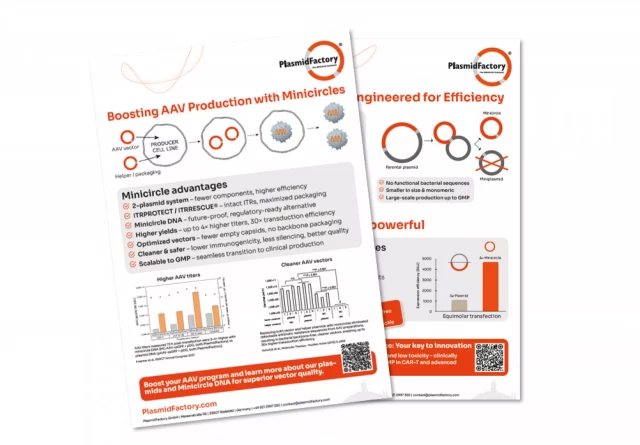
The small, backbone-free, supercoiled Minicircle DNA format is optimized for AAV production and translates structural DNA advantages into higher functional yields and improved vector safety.
- Improved producer cell transfection and downstream transduction
Due to their compact, supercoiled structure, minicircles support more efficient transfection of AAV producer cells, leading to improved virus quality. This translates into up to ~30% higher transduction efficiency in target cells, reflecting improved functionality of the produced vectors rather than changes in the target cells.
How Can Minicircle DNA Upgrade AAV Manufacturing Without Platform Disruption?

Minicircle DNA can be integrated into established AAV production workflows with minimal changes to existing processes — supported by PlasmidFactory’s EU-based GMP manufacturing capabilities from early development to large-scale production.
Flexible implementation models
Depending on platform strategy, serotype, and development stage, different DNA format and manufacturing approaches can be applied — with or without Minicircle integration.